What Is the October Birthstone? Opal and Tourmaline Guide

Introduction
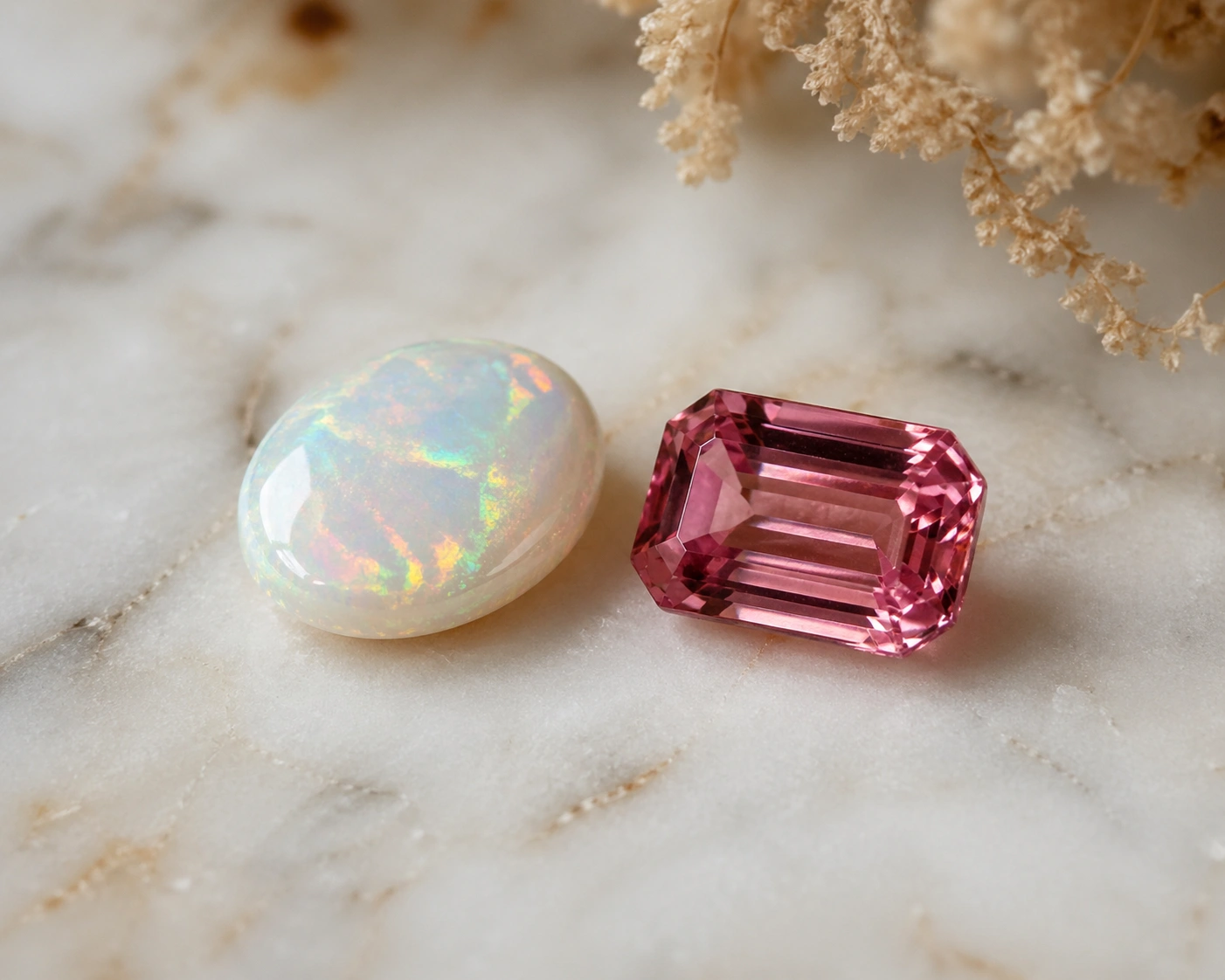
October is one of the few months that comes with two official birthstones: opal and tourmaline.
Opal is the traditional birthstone, admired for its shifting rainbow colors and its long history of meaning tied to hope, creativity, and love. Tourmaline is the modern choice, valued for its wide range of colors and its connection to balance, protection, and emotional healing.
In this guide, you will learn about the meaning and symbolism behind both stones, their healing properties, the colors each one comes in, how to care for them, and how to choose the right one as a gift.
| Note: Crystal healing is complementary and should never replace professional medical advice. |
What Is the October Birthstone?
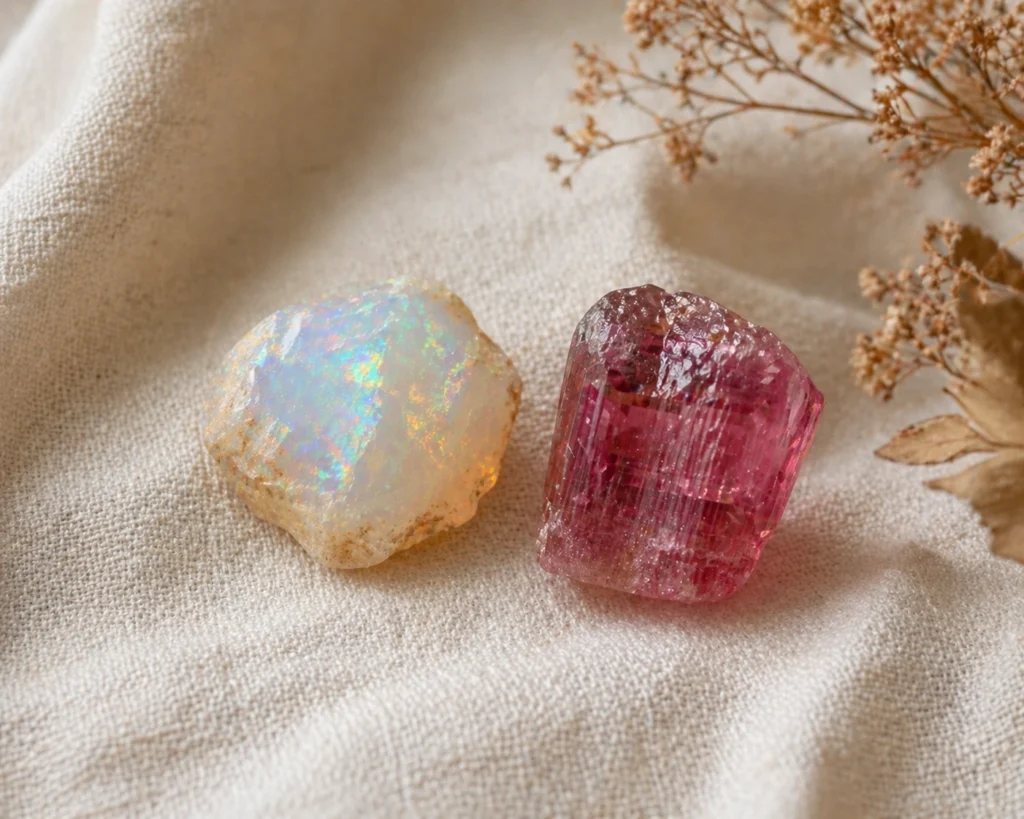
The birthstone for October is actually two stones: opal and tourmaline.
Opal is the traditional October birthstone, with a history going back to ancient India and Rome. Its name comes from the Sanskrit word upala, meaning precious stone, which later became opalus in Latin. Tourmaline is the modern birthstone, added later to give October-born people a more durable everyday option. Its name comes from the Sinhalese word toramalli, meaning stone of mixed colors, which reflects how often it appears in more than one color within a single crystal.
The two stones are also quite different in terms of hardness. Opal sits at 5 to 6.5 on the Mohs scale, making it softer and better suited for pendants and earrings. Tourmaline ranks at 7 to 7.5, which makes it hard enough for rings and daily wear.
Opal Meaning and Symbolism
Opal is often called the Queen of Gemstones, and it is easy to see why.
What makes opal unlike any other stone is its play-of-color. This is the shifting display of red, blue, green, and violet that appears as the stone catches the light. It is caused by tiny silica spheres inside the stone that diffract light into a spectrum of colors. No two opals look exactly the same.
Ancient Romans believed opal was the most powerful of all gems because it seemed to carry every color at once, making it a symbol of hope and good fortune. Ancient Greeks thought it could grant the gift of prophecy and protect its wearer from disease.
Today, opal is connected to creativity, imagination, love, and emotional healing. Many people also associate it with inspiration, making it a popular choice among artists and writers.
Opal Colors and Types
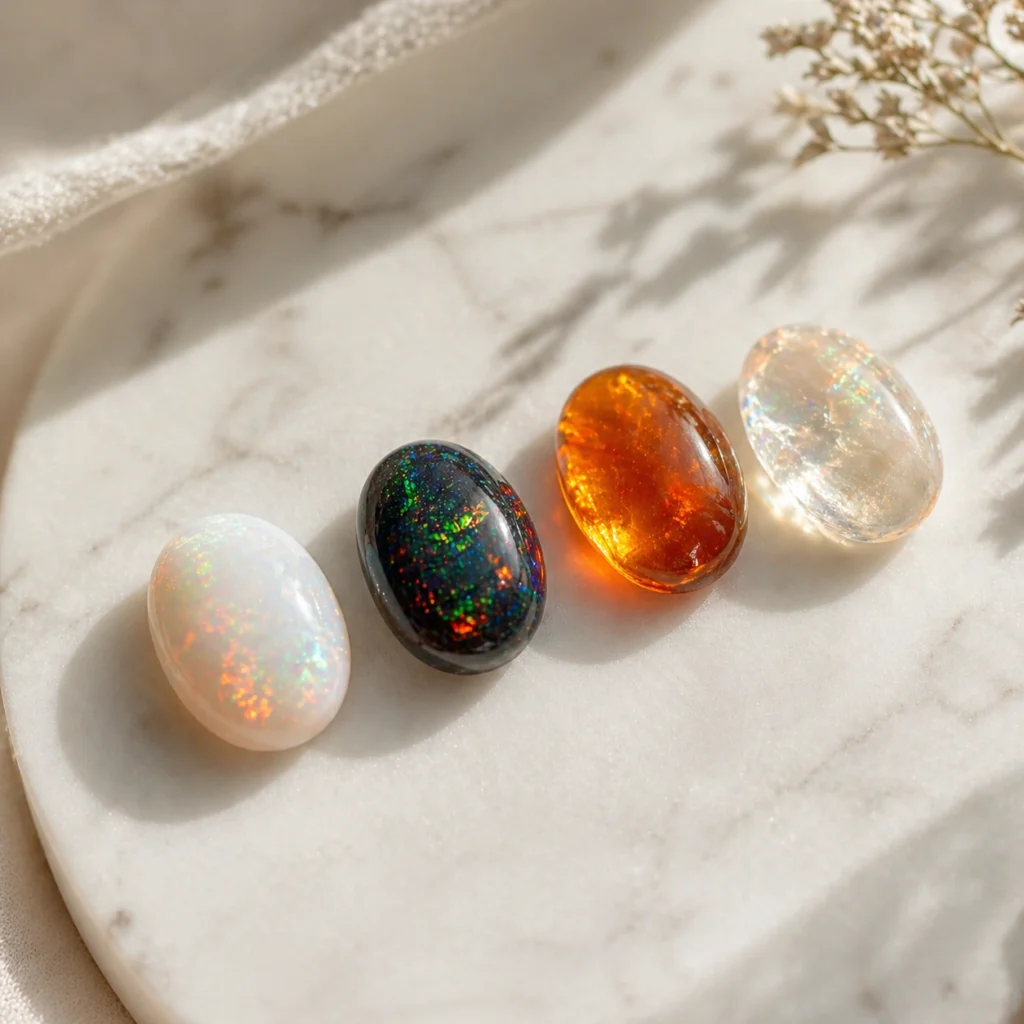
Opal comes in several distinct varieties, each with its own look and character.
- White Opal
The most common type, with a milky or light body tone and soft rainbow flashes across the surface. This is the variety most people picture when they think of opal jewelry.
- Black Opal
The rarest and most valuable variety. Its dark body tone makes the play-of-color appear more vivid and intense. Most black opals come from Lightning Ridge in Australia.
- Fire Opal
Known for its warm orange and red hues, fire opal sometimes displays little to no play-of-color at all. Mexico is the primary source for fine fire opals.
- Crystal Opal
Has a transparent or semi-transparent body that allows light to pass through fully, producing one of the most vivid color displays of any opal type.
Tourmaline Meaning and Symbolism
Tourmaline gets its name from the Sinhalese word toramalli, meaning stone of mixed colors, and that name tells you everything about what makes this gem special.
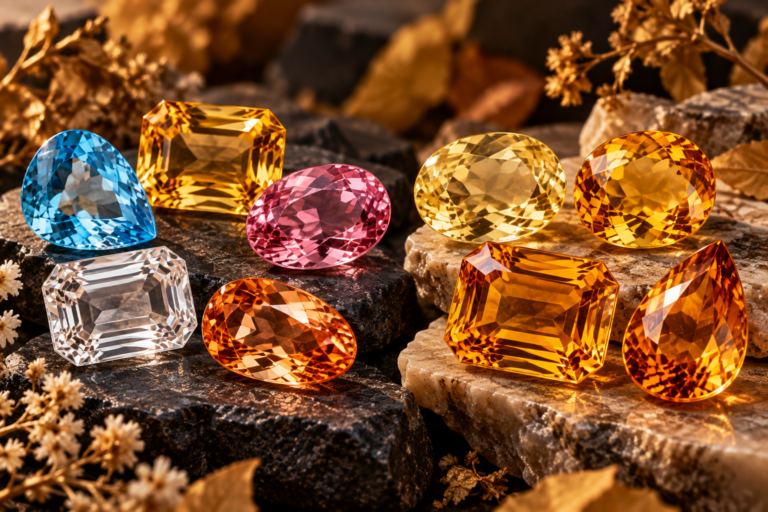
It exists in nearly every color of the spectrum, which is something very few gemstones can claim. This variety also caused a lot of confusion throughout history. One of the famous rubies in the Russian crown jewels, known as Caesar’s Ruby, turned out to be red tourmaline. Spanish conquistadors who discovered green tourmaline crystals in Brazil in the 1500s mistook them for emeralds. It was not until the 1800s that scientists recognized tourmaline as its own distinct mineral.
Tourmaline Colors and Types
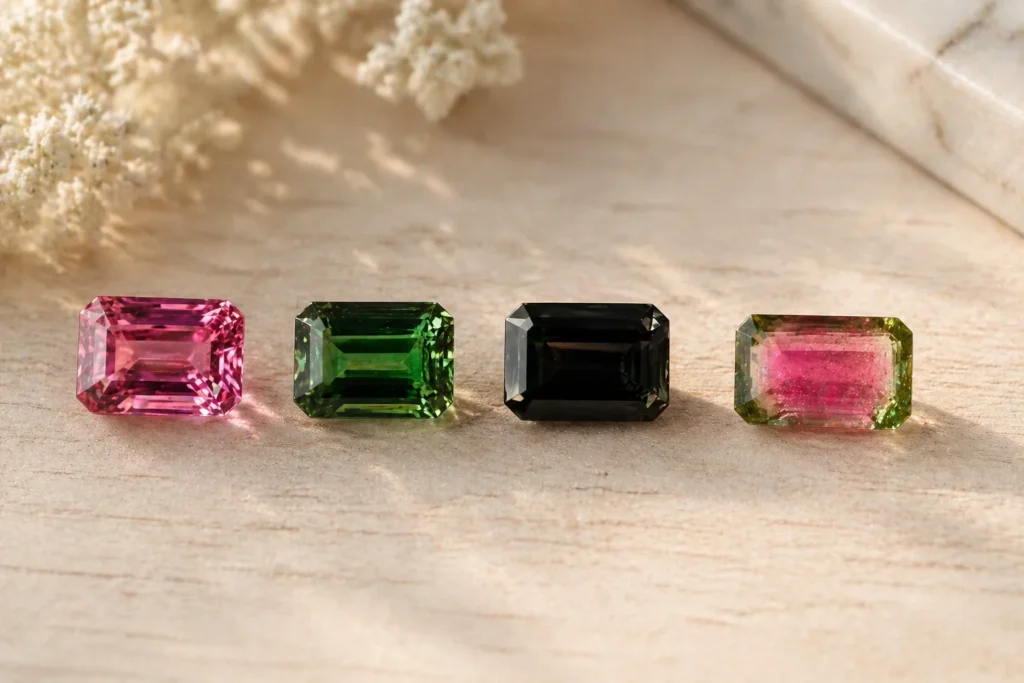
Tourmaline exists in nearly every color of the spectrum, and each variety carries its own distinct meaning and energy.
- Pink Tourmaline
Connected to love and compassion, pink tourmaline is one of the most popular varieties for jewelry and is closely associated with the heart.
- Green Tourmaline
Represents courage, strength, and vitality. It is often linked to growth and positive energy.
- Black Tourmaline
Widely known as a protective stone, black tourmaline is commonly used for grounding and shielding from negative energy.
- Watermelon Tourmaline
Shows both pink and green in a single crystal and is associated with harmony, balance, and joy.
Healing Properties of Opal and Tourmaline
Both opal and tourmaline have long been associated with healing and well-being. While these properties are symbolic and complementary rather than medical, many people find meaning and comfort in connecting with these stones.
Opal Healing Properties
1. Emotional Balance
Opal is said to help release negative thoughts and emotions, encouraging a greater sense of inner peace and calm. Many people turn to it during emotionally heavy periods as a reminder to slow down and reset.
2. Creativity and Inspiration
Opal has a strong connection to imagination and artistic energy. It is often associated with people who create, dream, and express themselves, making it a popular stone among those in creative fields.
3. Intuition
Opal is also linked to mental clarity and heightened awareness. Many believe it helps sharpen intuition and opens the mind to deeper levels of understanding and self-reflection.
Tourmaline Healing Properties
1. Balance and Grounding
Tourmaline is widely associated with calming the mind and reducing feelings of anxiety and stress. It is often used by people who want to feel more centered and emotionally steady in their daily lives.
2. Emotional Healing
Pink tourmaline in particular is closely connected to the heart chakra. It is thought to support love, self-compassion, and emotional recovery, making it one of the most sought-after stones for those going through personal challenges.
3. Protection
Black tourmaline is one of the most well-known protective stones in crystal healing. It is commonly used for shielding against negative energy and creating a sense of personal boundaries and security.
4. Physical Well-Being
Tourmaline has traditionally been linked to immune support and stress relief. While these are symbolic associations rather than medical facts, many people include it in their wellness routines as a grounding and supportive stone.
| Note: Crystal healing is complementary and should never replace professional medical advice. |
History and Origins
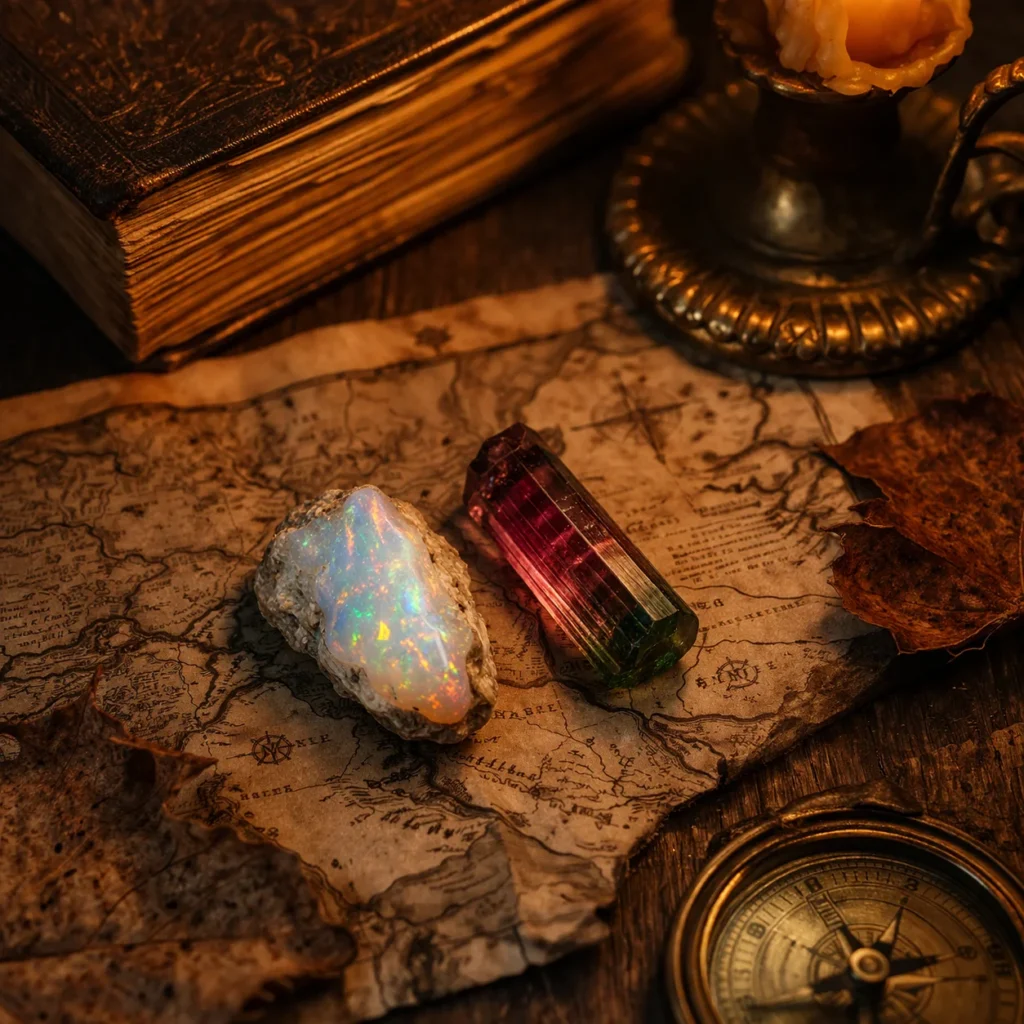
Opal History and Origins
Opal was first brought to the Western world from India, where it was called upala in Sanskrit. The Romans adopted it as opalus and prized it above all other gems. Ancient Bedouins believed it fell from the sky during thunderstorms, which explains the lightning-like flashes inside the stone.
Today, opal is mined mainly in Australia, with Lightning Ridge known for black opals and Coober Pedy for white opals. Ethiopia and Mexico are also notable sources.
Tourmaline History and Origins
For centuries, tourmaline was mistaken for other gems. Spanish conquistadors confused green tourmaline with emeralds in the 1500s, and several famous rubies in royal collections later turned out to be red tourmaline. It was not until the 1800s that scientists recognized it as its own mineral.
One of its most devoted admirers was Chinese Empress Dowager Cixi, who purchased nearly the entire output of a California mine and was buried resting on a pink tourmaline pillow. Today it is primarily mined in Brazil, Mozambique, Afghanistan, and the United States.
How to Use October Birthstones
There are several simple ways to bring opal and tourmaline into your daily life.
Wearing them as jewelry is the most popular choice. Opal works best in pendants and earrings where it faces less friction, while tourmaline is durable enough for rings and everyday wear.
During meditation, holding either stone or placing it nearby can encourage calm, creativity, or emotional balance depending on which one you choose.
In your workspace, keeping a piece on your desk serves as a quiet reminder of focus and inspiration throughout the day.
Both stones also make thoughtful gifts for October birthdays, Libra and Scorpio zodiac signs, and tourmaline is traditionally given to celebrate an 8th wedding anniversary.
Conclusion
Opal and tourmaline are two very different stones, but that is exactly what makes October such a special birth month.
Opal speaks to those drawn to mystery, imagination, and emotional depth. Tourmaline suits those who prefer bold color, grounding energy, and everyday protection. Whether you connect with one or both, each stone carries centuries of meaning worth exploring.
If you found this guide helpful, explore our other birthstone articles to learn more about the gems tied to every month of the year.